- ▾ ShakeOut Regions ▾
- Alaska
- American Samoa
- Arizona
- British Columbia
- California
- Central U.S. (AL AR IA IL IN KS KY LA MO MS NE OH OK TN)
- CNMI
- Colorado
- Guam
- Hawaii
- Idaho
- Japan
- Montana
- Nevada
- New Mexico
- New Zealand
- NorthEast U.S. (CT MA ME NH NJ NY PA RI VT)
- Oregon
- Puerto Rico
- Quebec & Eastern Ontario
- SouthEast U.S. (DC DE FL GA MD NC SC VA WV)
- Texas
- Upper MidWest U.S. (MI MN ND SD WI)
- U.S. Virgin Islands
- Utah
- Washington State
- Wyoming
- Yukon
- Other Countries


Businesses
Californians must get better prepared before the next big earthquake, and practice how to protect ourselves when it happens. The purpose of the ShakeOut is to help people and organizations do both.
The boxes below provide instructions for how large and small businesses, commercial facilities, non-governmental utilities and railways, chambers of commerce, etc., can plan their drill, tips for getting prepared, and suggestions for sharing the ShakeOut with others. With your participation, this may be the largest earthquake drill ever!
|
Other ways to participate: |
Which businesses are participating? |
SHAKEOUT SPOTLIGHT

To prepare for their drill in 2008, Prime Tech Cabinets had an all-employee meeting which included a presentation on earthquakes. They reviewed their evacuation plan with a Q&A session, and had a prize giveaway. During the drill they played the “drill broadcast” in both English and Spanish. After the drill, emergency contacts were verified and earthquake preparedness information was inserted in each employee’s paycheck.




PLAN YOUR DRILL
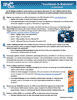
New! Download the Countdown to ShakeOut for Organizations tipsheet (300 KB PDF).
Today:
- Register your business to be counted in the ShakeOut Drill, get email updates, and more.
Between now and October 18:
- Consider what may happen in a major earthquake and plan what your business will do now to get prepared, so that when it happens you will be able to recover quickly.
- Talk to other businesses about what they have done, and encourage them to join you in getting more prepared.
- Plan your drill using one of the four levels of sample drills in the ShakeOut Drill Manual for Businesses (PDF).
- Download the Audio and Video "Drill Broadcast" recordings that have been created to provide instructions during your drill (Video versions have text captions).
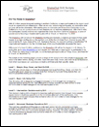
October 18, 10:18 a.m.:
- Conduct your drill. If you did not choose a drill from the ShakeOut Drill Manual for Businesses, then follow these simple steps:
- Drop, Cover, and Hold On: Have your employees Drop to the ground, take Cover under a table or desk, and Hold On to it as if a major earthquake were happening (stay down for at least 60 seconds). Practice now so your employees will immediately protect themselves during earthquakes! (See this page for what to do if outside, driving, in a tall building, or other situations.) For people with disabilities or access and functional needs, download our preparedness guide (661 KB) PDF.
- While still under the table, or wherever you are, look around and imagine what would happen in a major earthquake. What would fall on you or others? What would be damaged? What would life be like after? What will your business do before the actual earthquake happens to reduce losses and quickly recover?
- (Optional) Practice what your business will do after the shaking stops.
- After your drill is complete, have discussions about what was learned and incorporate these lessons into your disaster plan.
GET PREPARED
What we do now, before the next big earthquake, will determine what our lives will be like after.

The 7 Steps to an Earthquake Resilient Business booklet provides detailed instructions for what any size business can do to get prepare.
- Visit MyHazards (California Governors Office of Emergency Services) to discover the hazards that exist in your area and learn how to reduce YOUR risk!
- Encourage your employees to get ready at home and at work: The Seven Steps to Earthquake Safety is a good source for things individuals and families can do to prepare.
- Do a facility inspection for non-structural items (bookshelves, equipment, etc.) that might fall and be damaged or cause injury and secure them.
- Identify hazards and special needs in each department.
- Develop, review or exercise your business continuity plan with employees to identify and practice their responsibilities.
- Create or review your employee contact lists and communication plan.
- Locate utility shut off valves; make sure employees know the location, procedure and responsibilities.
- Inventory special skills within your organization useful in a disaster (amateur radio operator, search and rescue, etc.)
- Invite your local Fire Department to your next meeting to explain earthquake safety practices and demonstrate fire extinguisher use to employees.
- Include your critical need vendors in disaster planning. Create post-disaster agreements.
- The DRB Toolkit interactive software application is designed to assist small to midsize orgnizations build a comprehensive disaster plan and continuity program. Organizations receive a 50% discount code for the software when they register for the ShakeOut.
- Organize or refresh your emergency equipment - fire extinguishers, first aid, flashlights, food, crank radios, satellite phones, generator, fuel; make sure employees know the location and how to utilize supplies.
- Be prepared for the possibility that your employees may need to shelter in place for 2 – 3 days.
- Store at least one gallon of water per person, per day.
- What other supplies might you need if transportation routes were blocked and employees or customers needed to remain in your facility for an extended length of time?
- Identify any structural weaknesses in your building: ask a local earthquake retrofitting contractor for a structural inspection, and develop a plan to address any issues. If you rent your facility, ask the building owner about the state of the building. Consider whether earthquake insurance is right for you.
- Learn to access and use California Integrated Seismic Network earthquake tools. CISN identifies the strength and location of earthquakes to assist you in making response decisions.
- Promote first responder and Community Emergency Response Team (CERT) training for your employees.
- Provide non-English speaking employees or customers with written preparedness information in their language.
SHARE THE SHAKEOUT
- Encourage your employees to register as individuals to participate in the ShakeOut.
- Post posters about ShakeOut in customer areas and on employee bulletin boards. Put ShakeOut flyers at your public counters. Include a flyer in paycheck envelopes, or an article in your newsletter.
- Tell employees to watch "Preparedness Now", a compelling film that depicts what will happen in a "big one," and other videos.
- Add a link to ShakeOut.org on your website; use one of several ShakeOut web banners.
- Organize a brown bag lunch with your employees to share personal and family preparedness information and discuss what individuals and their families can do to ShakeOut. Have everyone register while at the lunch.
- Once your business is registered, you will receive ShakeOut preparedness tips, event updates, and more. Forward these to your membership and ask them to register, and forward the e-mails to everyone who matters to them. With your help this can become the largest earthquake drill in U.S. history!
- Encourage your vendors to register and participate in the ShakeOut. Their preparedness affects your company’s preparedness.
- Design and host preparedness events to encourage your community to join the ShakeOut and prepare for disasters. Create alliances with other businesses to make the event a bigger success.